
What Does It Actually Cost to Travel Full-Time With a Family? Our Real Numbers
We've been travelling full-time since 2022 with three daughters across 33+ countries. Here are the real cost structures we've found, and why the numbers are more in your control than you think.

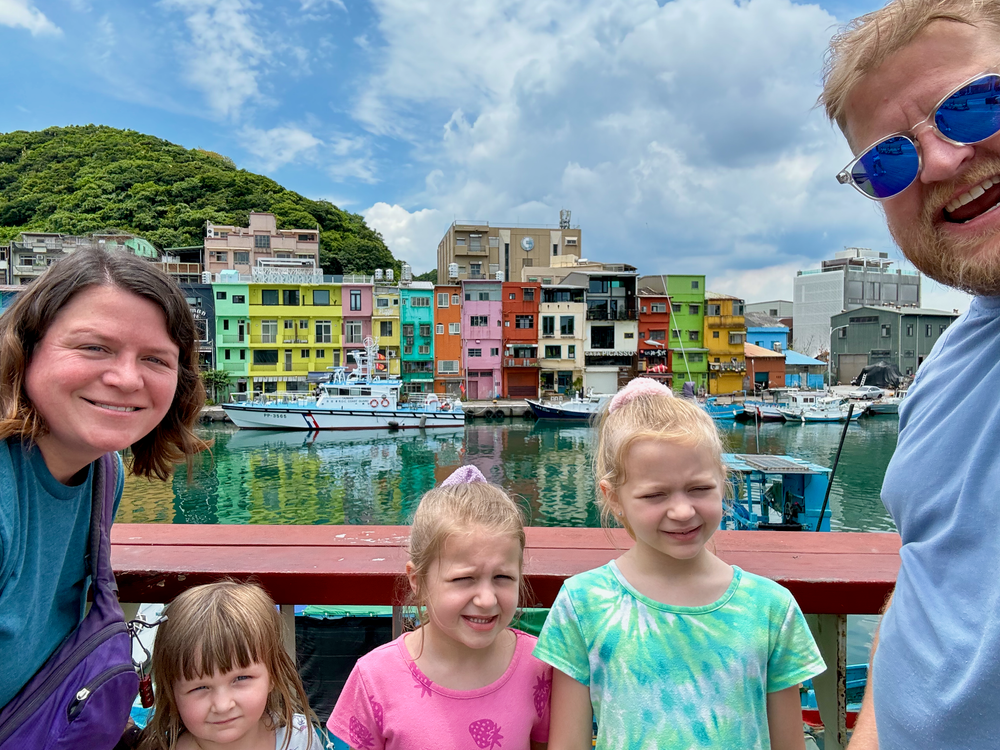
People ask us this question constantly, and the honest answer is: it depends on things that are completely within your control. That's not a dodge. The cost of long-term family travel is far more variable than most people assume, and understanding which variables matter most is more useful than any single number we could give you.
We've been on the road since May 2022 with our three daughters, and we've spent significant time in Japan (220+ days), Thailand (308 days), and Vietnam (197 days in Da Nang). Those three destinations represent a reasonably wide spread of costs - Japan is meaningfully more expensive than Southeast Asia, but also significantly cheaper than many Western European cities. Here's what we've learned about the real cost structure of long-term family travel.

The Big Three: Accommodation, Food, Transport
For most travelling families, three categories dominate spending: where you sleep, what you eat, and how you move around. Everything else - activities, shopping, incidentals - tends to be a smaller portion of the total, and also the part most subject to personal choice.
Accommodation is the biggest lever. In Da Nang, a comfortable three-bedroom apartment in a good neighbourhood runs considerably less per month than a one-bedroom in Tokyo. If you're doing short-term hotel stays and moving every few days, your accommodation costs will be dramatically higher than slow travellers who book monthly rentals. This single variable probably has more impact on total travel costs than any other factor.
Food costs scale with how you eat. Tokyo convenience store lunches are surprisingly reasonable. Tokyo restaurants - especially if you're feeding a family of five - add up fast. In Thailand and Vietnam, eating well at local restaurants costs a fraction of what equivalent-quality food costs in Japan or Europe. We've found that adopting local food habits rather than gravitating to Western restaurants makes a material difference to the food budget without sacrificing quality - often the opposite.
https://www.youtube.com/watch?v=hSEKlmEaWnEJapan vs Southeast Asia: A Real Cost Comparison
Since we have substantial time logged in both, this comparison is worth being specific about. These are rough daily variable costs (food, local transport, activities) for our family of five, excluding accommodation:
| Destination | Daily Variable Budget | Notes |
|---|---|---|
| Japan (Tokyo/Osaka) | $120 - $180 | Higher restaurant costs, excellent public transport |
| Japan (smaller cities) | $80 - $120 | Better value outside the major hubs |
| Thailand (Bangkok/Chiang Mai) | $60 - $100 | Strong food scene at all price points |
| Vietnam (Da Nang) | $50 - $80 | Our most affordable long-term base |
These are variable costs only. Add accommodation on top, which ranges from around $800-1,200/month for a good family apartment in Da Nang to $2,000-3,500+ in Tokyo depending on location and size.
https://www.youtube.com/watch?v=4U5hSpgDQJUThe Costs People Forget to Include
Beyond the obvious categories, there are several costs that consistently surprise first-time long-term travellers.
Connectivity. Staying connected across multiple countries adds up. We use Holafly eSIM for mobile data - use code ADAMANDLINDS for 5% off destination plans. For longer stays, their Holafly Plans subscription (Light at $49.90/month or Unlimited at $64.90/month) makes more sense than buying individual country plans repeatedly. With the ADAMANDLINDS code you get 10% off Plans, stackable with the annual plan discount for roughly 30% total savings. The Always On feature gives you 1GB free across 76+ destinations automatically - a useful backup when you're in transit.
Travel insurance. Non-negotiable for families, and often underestimated in the annual budget. We use SafetyWing - we are not insurance brokers and this is not a personal recommendation, so compare policies and find what suits your specific situation and destinations.
Education. For worldschooling families, online platforms, curriculum materials, and supplementary learning all carry costs. We use Outschool with code ADAMANDLINDS30 for $30 off your first class.
Activities. Day trips, museum entries, theme parks - these feel like occasional treats but can be significant over a month, especially with children. We book activities through Klook (code ADAMANDLINDSKLOOK) which consistently has better pricing than booking at the door.

How We Track All of This
Knowing your costs in real time - not just at the end of the month - is what keeps long-term travel sustainable. The app we rely on for this is TravelSpend. Every expense goes in at the moment of spending, converted to our home currency automatically. At any point in the day we know exactly where we stand against budget, broken down by category.
It's rated 4.8 on the App Store and is genuinely one of the simpler, more reliable travel apps we've come across. The premium annual plan is worth it for the live exchange rates and unlimited trip history - use referral code ADAMANDLINDS at get.travelspend.app for 50% off.
Is Long-Term Family Travel Cheaper Than Living at Home?
Possibly, depending on where you're from. For families from high cost-of-living cities in the UK, Australia, or North America, extended stays in Southeast Asia or parts of Eastern Europe can come in under what a conventional home-based lifestyle costs. Japan is probably roughly equivalent. Western Europe, Japan for shorter trips, and destinations with significant activity costs can easily exceed what you'd spend at home.
The more honest framing is: long-term travel can be made to fit a wide range of budgets if you're intentional about the main cost drivers. Accommodation flexibility, local eating habits, and smart booking for activities and transport give you most of the leverage you need. The numbers just have to be tracked - which is what TravelSpend is for.
If you want a custom itinerary with realistic costs built in for a specific destination, Lindsay is a professional family travel advisor at Fora Travel. Reach her at [email protected].
This post contains affiliate links. If you purchase through our links we may earn a small commission at no extra cost to you - and sometimes a discount for you too. Read our full affiliate disclosure. We are not insurance brokers; insurance mentions are not personal recommendations.