
Jackery Portable Power Stations: The Complete Guide to Home Backup and RV Power (2026)
A complete guide to Jackery's portable power station lineup for home backup and RV owners — with appliance power charts, full product comparisons, and honest buying advice.

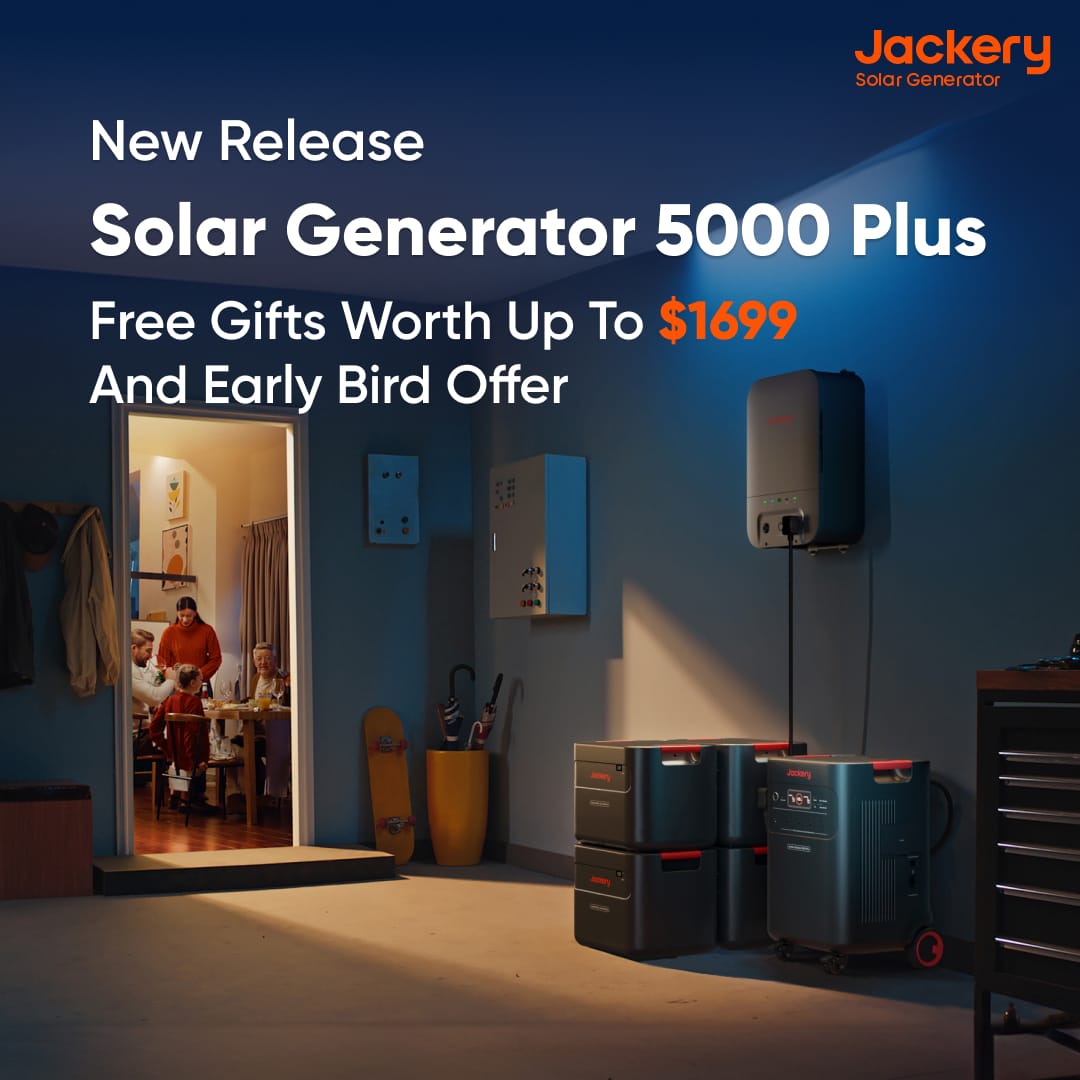
The grid goes down more than most people expect. According to the US Energy Information Administration, the average American experiences over seven hours of power interruptions per year — and that figure has been trending upward as extreme weather events become more frequent. For RV owners, the calculus is different but equally real: generator noise, fuel costs, campsite hookup fees, and the constant question of whether you can actually park somewhere without shore power.
Jackery has spent over a decade building portable power stations that address both problems. This guide covers their full range — from compact units that handle essential devices during an outage to expandable systems capable of running an entire home or full-time RV setup — with pricing, specs, and honest guidance on which unit actually fits which situation.

What Makes Jackery Different from a Traditional Generator?
The short answer: silence, safety, and solar compatibility. A petrol generator produces carbon monoxide, which means it can never be used indoors — a significant limitation when a power outage hits in winter or during a storm and you need warmth and light inside your home. Jackery units produce zero emissions, run completely silently, and can sit in your living room or RV without any ventilation concerns.
The longer answer involves battery chemistry. Jackery's newer product lines use LiFePO4 (lithium iron phosphate) cells, which offer 4,000+ charge cycles versus the 500 or so you'd get from older lithium-ion chemistry. At one full charge cycle per day, a LiFePO4 unit delivers more than a decade of reliable service. The cells are also inherently more thermally stable — less prone to the kind of runaway heating issues that have occasionally plagued older lithium-ion battery products.
That combination — silent operation, safe indoor use, decade-long lifespan — is what's driven the shift away from petrol generators for home backup among households that experience outages regularly.
Understanding Jackery's Product Lines
Jackery's catalogue has three distinct tiers, each serving a different use case.
Explorer portable power stations are the standalone battery units. You charge them from a wall outlet, a car socket, or solar panels, and draw power from them when you need it. These range from compact 268Wh units up to the 2000 v2 at 2042Wh.
Solar Generator bundles pair an Explorer station with one or more SolarSaga solar panels. If you're buying your first Jackery setup and want solar capability from day one, these bundles are the most cost-effective way in.
HomePower systems are Jackery's home-focused tier — higher-capacity units designed for whole-home circuit backup, with outputs powerful enough to run HVAC equipment, refrigerators, sump pumps, and medical devices simultaneously.

The Explorer Range: Portable Power Stations
These are the core of Jackery's lineup. Every Explorer unit can be paired with SolarSaga panels for solar recharging, and the mid-to-upper models offer enough capacity and output for genuine emergency home use.
| Model | Capacity | Continuous Output | Weight | Price |
|---|---|---|---|---|
| Explorer 300D | 268Wh | 300W | 3.4kg | $219 |
| Explorer 300 v2 | 288Wh | 300W | 3.7kg | $269 |
| Explorer 600 Plus | 632Wh | 800W | 8.3kg | $429 |
| Explorer 1000 v2 | 1070Wh | 1500W | 11.8kg | $799 |
| Explorer 1500 v2 | 1485Wh | 2000W | 15.4kg | $699 |
| Explorer 1500 Ultra | 1512Wh | 2500W | 17kg | $899 |
| Explorer 2000 v2 | 2042Wh | 2200W | 21kg | $749 |
Two pricing anomalies worth noting: the Explorer 1500 v2 at $699 delivers more capacity than the 1000 v2 at $799, making it exceptional value right now. Similarly, the 2000 v2 at $749 for over 2kWh is competitively priced against anything else in its class. These reflect how the product line has matured — earlier model pricing has come down while the specs remain strong.
Solar Generator Bundles
If you're starting from scratch and want solar recharging built in, these bundles are more economical than buying station and panel separately.
| Bundle | Capacity | Included Panel | Full Solar Recharge | Price |
|---|---|---|---|---|
| Solar Generator 300 v2 | 288Wh | SolarSaga 40W | ~9 hrs | $389 |
| Solar Generator 600 Plus | 632Wh | SolarSaga 100W | ~8 hrs | $649 |
| Solar Generator 600 v2 | 632Wh | SolarSaga 200W | ~4 hrs | $699 |
| Solar Generator 1500 v2 | 1485Wh | SolarSaga 200W | ~8 hrs | $699 |
| Solar Generator 2000 v2 | 2042Wh | SolarSaga 200W | ~10 hrs | $1,299 |
| Solar Generator 2000 Plus | 2042Wh | SolarSaga 200W (IBC) | ~2 hrs | $1,099 |
The Solar Generator 1500 v2 bundle deserves particular attention: 1485Wh of capacity, a 200W panel, and the whole package at $699. For a household looking for meaningful emergency backup with solar recharging, that's a compelling entry point.
The HomePower Series: Whole-Home Backup

The HomePower units are designed for a different problem entirely. Where the Explorer line handles essential devices and keeps the lights on, the HomePower series can power a home at something approaching normal capacity — running HVAC, refrigerators, sump pumps, and medical equipment simultaneously.
| Model | Capacity | Max Output | UPS Feature | Expandable | Price |
|---|---|---|---|---|---|
| HomePower 3000 | 3000Wh | 3000W | Yes | No | $1,299 |
| HomePower 3600 Plus | 3600Wh | 3600W | Yes | Yes | $1,599 |
| Explorer 2000 Plus Series | 2-24kWh | 6000W (parallel) | Yes | Yes, to 24kWh | $2,599 |
The UPS (uninterruptible power supply) feature on these units means they switch to battery power within 0.01 seconds of detecting a grid failure — fast enough that sensitive electronics like computers and medical equipment experience no interruption. For anyone with home medical equipment or a home office setup where data loss during an outage is a real concern, this is significant.
The Explorer 2000 Plus Series is the most ambitious product in Jackery's catalogue. Its expandable architecture accepts Battery Pack 2000 Plus units ($899 each) up to a total of 24kWh, and two units in parallel deliver 6000W of continuous output at both 120V and 240V. That's enough to run a small home's essential systems for several days on a single charge, or indefinitely when paired with solar panels using the advanced IBC technology that enables full recharge in under two hours with sufficient panels.
The SolarSaga Panel Range
All Explorer and HomePower units accept SolarSaga panels for solar recharging. Panels can also charge small devices directly via built-in USB-A and USB-C ports, independent of the power station.
| Panel | Output | Rating | Key Feature | Price |
|---|---|---|---|---|
| SolarSaga 40 Air | 40W | IP68 | Lightest option | $99 |
| SolarSaga 40W Mini | 40W | IP65 | Compact fold | $129 |
| SolarSaga 100 Prime | 100W | IP68 | 25% efficiency | $179 |
| SolarSaga 100W | 100W | IP68 | Proven workhorse | $199 |
| SolarSaga 100 Air | 100W | IP68 | Lightweight build | $219 |
| SolarSaga 200W | 200W | IP68 | Bifacial cells | $379 |
The IP68 waterproof rating across most of the range means these panels can be left outside in rain without concern. The 200W bifacial model captures light from both sides of the panel, picking up reflected ground light to improve output in non-ideal conditions — a meaningful advantage for RV setups where panel placement isn't always optimal.
Jackery for Home Backup: What Can It Actually Power?
This is the question that matters most for households evaluating emergency power. Watt-hour capacity tells you how much energy is stored; the wattage draw of your appliances tells you how long it lasts. Here's a rough guide based on an Explorer 1000 v2 (1070Wh):
| Appliance | Typical Draw | Hours from Explorer 1000 v2 |
|---|---|---|
| LED lighting (10 bulbs) | 60W | ~17 hrs |
| Phone charging | 18W | ~50 charges |
| Laptop | 65W | ~15 hrs |
| CPAP machine | 30-60W | ~15-35 hrs |
| Mini-fridge | 80W | ~11 hrs |
| Full-size fridge | 150W | ~6 hrs |
| Window AC unit | 1200W | ~0.8 hrs |
| Electric kettle | 1500W | ~0.7 hrs |
The takeaway: a 1000Wh unit is excellent for lighting, communication, medical devices, and food preservation in a compact fridge. It won't run a central air conditioning system or an electric range for meaningful periods. For those higher-draw appliances, the HomePower series is the appropriate solution.

Jackery for RV and Van Life: The Real Advantage
For RV owners, the value proposition is about freedom more than emergency preparedness. With a capable Jackery setup, you can dry-camp (boondock) at locations without electrical hookups for days at a time rather than hours. The elimination of a petrol generator also removes the noise complaint problem that gets RVers kicked out of otherwise perfect spots.
A typical full-time RV setup for a couple or small family would look something like the Explorer 2000 v2 ($749) paired with two SolarSaga 200W panels ($379 each): over 2kWh of storage, 400W of solar input, and the ability to run essential RV appliances and charge devices through most of a day without touching the generator. For full-time van lifers running a home office, the Explorer 2000 Plus Series with its expandable capacity and 120/240V output is the more serious solution — it can run a full workstation, induction cooktop, and climate control simultaneously.
Which Jackery Should You Buy?
| Your Situation | Recommended Unit | Why |
|---|---|---|
| Short outages, essentials only | Explorer 600 Plus ($429) | Handles lights, devices, CPAP overnight |
| Multi-day home backup, fridge essential | Solar Generator 1500 v2 ($699) | Best value in the range right now |
| Home office, sensitive equipment | HomePower 3600 Plus ($1,599) | UPS switching, expandable |
| Whole-home backup, extended outages | Explorer 2000 Plus Series ($2,599+) | Scalable to 24kWh, 6000W output |
| Weekend RV / camping | Solar Generator 600 v2 ($699) | Complete kit, portable, 200W panel |
| Full-time RV or van life | Explorer 2000 v2 ($749) + 2x SolarSaga 200W | High storage, fast solar recharge |
Frequently Asked Questions
How long will a Jackery power station last? Models using LiFePO4 chemistry (the v2 and Plus series) are rated for 4,000+ charge cycles with minimal degradation. At one cycle per day, that's over 10 years of daily use.
Can a Jackery power station run a refrigerator? Yes, depending on the fridge and the unit. A compact or mini-fridge drawing around 80W can run for 11+ hours from an Explorer 1000 v2. A standard full-size fridge drawing 150W would run for approximately 6 hours from the same unit. The HomePower series can run a full-size fridge continuously alongside other appliances.
Does Jackery qualify for the federal tax credit? Jackery home energy storage products may qualify for the federal Residential Clean Energy Credit (30% tax credit) when installed as part of a home solar system. Check with a tax professional and the current IRS guidelines, as eligibility rules can change.
Can you charge a Jackery with solar while also drawing power from it? Yes. All Jackery units support simultaneous charge-and-discharge, so solar panels can be topping up the battery while you're drawing power from it.
How long does solar recharge take? It depends on panel wattage, sunlight conditions, and battery capacity. A SolarSaga 200W panel recharging an Explorer 1500 v2 takes approximately 8 hours in direct sunlight. Two panels halve that time. Real-world results in partly cloudy conditions typically run 30-50% longer than the stated figures.
Final Thoughts
Jackery builds well-engineered products at competitive prices, and the LiFePO4 chemistry in their current lineup represents a meaningful generational improvement over earlier units. For home backup use, the sweet spot for most households is the 1000-1500Wh range — enough to handle the appliances that actually matter during an outage, at a price point that doesn't require significant deliberation. For RV owners, the combination of a 2000Wh-class station and 200-400W of solar panels is the setup that delivers genuine off-grid independence.
You can browse the full Jackery range at jackery.com. All prices listed are current USD retail at time of writing and subject to change — Jackery periodically runs promotional discounts, so checking their site directly before purchase is worth doing.
This post contains affiliate links. If you purchase through our Jackery links, we may earn a small commission at no extra cost to you. Read our full affiliate disclosure.